Sponsored links

Showing posts with label tradition. Show all posts

2008-09-25

Events of the week end in Florence and surroundings

In Oltrarno on September 26-28 you can find between Piazza S Spirito, Piazza della Passera and Piazza Pitti the Florence wine event and as the word say you can taste all the best Tuscan and Italian wine: from Morellino to Brunello and Barolo. Concerts and dinners all over these squares and on a Sunday a market…the bad note is that at 10pm everything shuts down.

Speaking about wine we cannot forget the most famous wine event of Tuscany in Impruneta. The wine fair takes place on Sunday at 3,30pm and as every year there’s the flats parade with the four area (rione) of the Chianti village: Pallò,S.Marie, Fornaci and S.Antonio.

Another wine fair is near Siena in this tiny medieval village called Vagliagli (September 25th-28th). This tiny village will be a show case of typical Tuscan products and wine tasting than another floats parade inspired by country life with men and women dressed in traditional costumes.

And for those of you who like the so-called sagre, festivals, in Certaldo there’s the T-bone steak and porcini mushroom festival instead closer to Florence, in San Donnino there’s the pork festival. They start at 7,30pm with tasting of Tuscan delicatessen, ham, salami, crostini and lard then pasta dishes with sauces with a pork base and as a second dish; sausages, aristae, pork meat, mixed grilled…

2008-07-18

Mercantia: festival in Certaldo

Yesterday evening I went with some friends to Certaldo, a medieval village few miles outside Florence. Every year, during the month of July, they have a festival called MERCANTIA, where people coming from all over Europe invade the medieval streets of Certaldo with dancing, light and fire games, music and theatre. It was the first time for me.
Certaldo is a very charming town and in this occasion it opens every single courtyard, door, palaces, gardens and it is very worthy to come here and spend sometimes but the festival itself didn’t make me crazy. Maybe it is not the kind of event I was expected. I thought more about a medieval festival but it is like "Pelago on the road" (another village outside Florence) with musicians, street artists, puppeteer…

There are valid artists such as some puppeteers but also a lot of people that are there only to make some noises. Altogether the atmosphere is vibrant, lively with music, colours and special effects and in every corner you can find the most variegated humanity.

I liked the main streets full of colours, with a lot of artists playing instruments, there were also people dressed with incredible costumes as well and the best part of it, which I liked a lot, was the Palazzo Pretorio. We have seen some interesting shows in its courtyard. The market along the wall is nice too even I wouldn’t buy a single piece. I think also that a lot of people like this chaos, it was so crowded!
A now few notes about the people: two nice and skinny girls asked us where the cemetery was to put their tent (!), a very happy couple kissing each other completely careless of the chasm behind them (…), a young Rasta mummy who breast feed her child, a fat fakir who played with fire, broken glasses and snakes…people everywhere with objects, instruments, flags who tried to do something and raise some money.
The ticket is not cheap: Thursday at € 7,50, Saturday/Sunday € 15,00, considering that if you go up there you eat something, a glass of wine…well maybe it is worthy to go only once in a lifetime.

2008-07-01

Palio di Siena

On the 2nd of July there is one of the World’s most famous horse races: the Palio di Siena.
It's a wonderfully visual (and often brutal) horserace around the famous Piazza del Campo in the center of Siena.
It is participated by all of the 17 neighborhoods (the "contrade") that make up the city of Siena over the course of 2 different races, one which is held July 2nd (Feast day of the Visitation) and the other on August 15th (Feast day of the Assumption or Palio dell'Assunta).

There are numerous festivities all over Siena leading up to the Palio. 4 days prior to the race, the Piazza del Campo is transformed into the track.
The evening prior to the races is where the real fun begins, where long tables are set up along the streets for huge meals in celebration of the hopeful victory that will follow the next day. The day of the race, a spectacular parade is held where each neighborhood enters the piazza accompanied with trumpets and flag tossers, everyone dressed in traditional medieval garments.

When the time comes for the 90 second, three lap race around the piazza, the crowd goes wild cheering on their neighborhood with pride. The winning neighborhood is presented with a hand-made banner of silk followed by a tremendous celebration for their victory.

How to go from Florence to Siena
By bus: the SITA line from the Central Station Square (1 hour and 15 minutes with the "rapida" course).
By train: on the Firenze-Empoli-Siena (very slow!)
By car: highway Firenze-Siena (south of Florence), one hour drive.

2008-06-25

The historic football of Florence named "Calcio storico fiorentino"

Yesterday was Saint John, the patron of Florence. In Florence we are used to celebrate this day in several ways: first, everything is closed. People don't go to work, only touristic stores are open.
During the day there are historic processions and canoa races in the Arno river.
At the end of the day, exciting fireworks are waited from everybody.
But this year there was something special more longed for: the return of "Calcio Storico", the florentine historic soccer played in medieval costumes.
The game is played in the Santa Croce square, where a temporary field is built and covered with sand. Several matches are held between 4 teams representing each quarter of Florence in June. The final match is held on the 24th of June. It's a rough game, where players keep running with the ball (the "caccia") trying to avoid smash, fists and collisions.
Every year someone gets hurt and is brought to Hospital...
In 2006 the game was becoming too violent and it was suspended. Finally, after 2 years, the Calcio storico has come back with different rules and new teams (younger players).
Yesterday the final match was between the red team (representing Piazza Santa Maria Novella) and the blue team (Piazza Santa Croce). The final score was: 9 "cacce" and a half to 4, in favour of red ones.

2008-02-29

Exhibition of the flagwavers in Piazza della Signoria

On sunday there will be a special exhibition in Piazza Signoria for the 35th anniversary of the origin of the "Bandierai degli Uffizi" (1973 – 2008) the official flagwavers of Florence. From 11.30 am an historical parade will start from Palagio di Parte Guelfa, than through Via Porta Rossa, Piazza del Mercato Nuovo, Via Vacchereccia until Piazza della Signoria. There they will perform their show for 40 minutes.
The "Bandierai degli Uffizi" are integrally connected to the history of Florence. The group carries the flags which represented the pricipal Magistracies and legal offices of the powerful 16th century Florentine Republic. Within this great tradition they perform not a show of personal fantasy or improvisation , but a performance which is the result of years of precise training, done with respect of traditional configurations. Every flag had initially the symbol of 1 of the 16 principal Magistracies that existed in the 16th century Florentine Republic.

2007-09-04

Feast of Rificolona

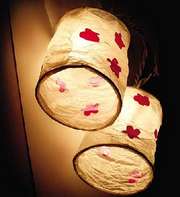
This friday in Florence there will be the "rificolona": an historical event made for kids. Children wander through the streets of Florence carrying papier-mâché lanterns tied to the ends of sticks, called rificolone.

More probably the Festa della Rificolona grew out of the great fall market held September 7 (the day before the Nativity of the Virgin) in Piazza Santissima Annunziata. It was perhaps the most important market-day of the year, because it allowed the farmers to gather cash for the coming winter. To arrive early those living in the outlying regions would shoulder their packs long before dawn and carry lanterns, made by suspending candles within tissue-paper wind-shades, to light their way. Entire families would come, dressed in their Sunday best, but they were ignorant county folk and their attempts at elegance only made the city people laugh (Florentines still call an overdressed, over made-up woman a rificolona). Children would blow whistles at them, and make their own lanterns with colored tissue paper to follow along, or shoot at the farmers' lanterns with blowguns, in an attempt to knock over the candles and set the tissue paper ablaze.

The Festa della Rificolona closes with a procession on the night of the 7th, from Piazza Santa Croce to Piazza Santissima Annunziata, which is led by the Cardinal.
Various Rificolona laboratories are organised by the City Wards to help keep up the lantern making tradition.

2007-08-31

European Biennial of Wrought Iron Exhibition

The European Biennial of Wrought Iron Exhibition reaches its 17th edition. The European Biennial of Wrought Iron Exhibition is an important meeting and exchange point for blacksmiths from all over the world, who are the keepers of an ancient profession that, in centuries, has maintained unchanged many of its characteristics. Blacksmiths are the real protagonists of an event that this year is even richer for what regards the international character of the manifestation, thanks to the twinning between 7 municipalities, members of the European Union of the Cities of Iron, that was signed in Stia last year.

Thie event is held is Casentino, Tuscany, in the city of Stia.

Program:


Thursday 30th August

10:30 piazza Tanucci, inauguration ceremony

11:30 piazza Tanucci, visit of the stands

21:00 piazza Mazzini, Opening of the World Forging Championship

21:30 Pieve di Santa Maria Assunta - piazza Tanucci, Concert : “Albacustica” and vocal group directed by G.M. Checcacci

Friday 31st August

8:00-24:00 piazza Mazzini, World Forging Championship

08:20-20:00 Palazzo Comunale, International design and drawing contest
“Pierluigi Della Bordella”

09:00-24:00 piazza Tanucci, opening time of stands

21:00 Palagio Fiorentino, Conference by prof. Ortensio Mendicino and prof. Peter Parkinson

Saturday 1st September

8:00-24:00 piazza Mazzini, World Forging Championship

08:20-20:00 Palazzo Comunale, International design and drawing contest “Pierluigi Della Bordella”

09:00-24:00 piazza Tanucci, opening time of stands

Sunday 2nd September

08:00 piazza Mazzini, non-competitive forging exhibition

09:00-23:00 piazza Tanucci, opening of the stands

12:00 medieval centre and Parco delle Terme, historic procession and exhibition of crossbows from San Sepolcro

16:30 piazza Mazzini, Prize-giving ceremony

How to arrive in Stia
BY CAR
- from Florence: Pontassieve, S.S.70, Consuma mountain pass, Scarpaccia, Stia
- from Arezzo: S.S.71 Umbro-Casentinese, Bibbiena, Poppi, Pratovecchio, Stia
- from Cesena: E45 Rome direction, Exit at Bagno di Romagna, Mandrioli mountain pass, Badia Prataglia, Soci, Poppi, Pratovecchio, Stia
- from Mugello: San Piero a Sieve, Dicomano, Londa, Croce ai Mori mountain pass, Stia

by motorway
- from south direction: A1 exit Arezzo, S.S.71 Umbro-Casentinese direction Casentino, Bibbiena, Poppi, Pratovecchio, Stia
- from north direction: A1 exit Barberino di Mugello, San Piero a Sieve, Dicomano, Londa, Croce ai Mori mountain pass, Stia
A1 exit Firenze Sud , Pontassieve, Diacceto, Consuma mountain pass, Scarpaccia, Stia
A14 exit Cesena Nord, E45 Rome direction, exit Bagno di Romana, Mandrioli mountain pass, Badia Prataglia , Soci , Poppi, Pratovecchio, Stia

BY BUS
- from Florence: SITA bus for Casentino (Stia) – direct line

BY TRAIN
- from Florence: Train for Arezzo, Change for L.F.I. train to Stia
- from Arezzo: L.F.I. train to Stia

2007-03-16

Easter in Florence: the explosion of the Cart

Easter is coming.. Florence is warm and full of the colors and smells of Spring. In these days temperature has reached 24° and sun is over the city.

There are several tradition in Florence, for Easter holidays.
The main important event is "the scoppio del carro" (=the explosion of the Cart).

The Explosion of the Cart on Easter is one of the oldest traditions in Florentine culture.
The ceremony goes back to the First Crusade, which was called to liberate the Holy Sepulcher from the hands of the infidels. In 1097, under the command of Goffredo di Buglione, the crusaders departed for Palestine and in the summer of 1099 laid siege to and sacked Jerusalem. According to tradition, it was the Florentine Pazzino de’ Pazzi to scale the walls of the Holy City first. For this act of courage, Goffredo di Buglione gave him three shards of the Holy Sepulcher; when he returned to Florence, he donated them to the city in a grand celebration, and they are now preserved in the church of the Holy Apostles.
Historians tell us that after the liberation of Jerusalem, on the day of Holy Saturday, the crusaders gathered in the Church of the Resurrection and gave everyone present holy fire, the symbol of purification. This ceremony was the origin of the Easter tradition of giving out holy fire to the Florentine people. With the passing of time the planning of the festival became increasingly articulated, to the point that the use of a cart to transport the holy fire was introduced, with a tripod full of burning coal.
Today the cart of Easter fire, pulled by oxen and escorted by 150 soldiers, musicians, and flag-bearers of historic soccer, starts from Piazzale del Prato and arrives in Piazza del Duomo. At this point a metal wire unites the cart to the top of a wood column placed in the center of the choir. In the meantime, a procession begins from the church of the Holy Apostles led by the Gonfalone of Florence and flag-bearers of the Pazzi family, with priests and city officials. At 11.00, to the sounds of “Gloria in excelsis Deo,” the fuse of a rocket is lit and it flies, whistling, to set on fire the fireworks in the cart. According to tradition, if the flight of the rocket is perfect, it will be a positive year for Florence.

Link sponsorizzati